Delhi
08048033088
+917678697164
Biological Effluent Treatmet Plant

Bakery Industry Effluent Treatment Plant

INR 540000 INR 565000
In stockcod not available
Phone Number

08048033088

Please keep 0 before dialling the number.

Email Address ventilairpawan@gmail.com

Mon-Thu: 10 AM - 2 PM • Fri: 3 PM - 7AM

Other Website Visit our other website
Address H 5/49, near Rj Palace, Pocket 5, Sector 16, Rohini, New Delhi, Delhi, 110004, India

Delhi, India, 110004
Description

VEPL offers chocolate industry, a Bio ETP (Effluent Treatment Plant) which is crucial for treating wastewater generated during chocolate production. The chocolate-making process involves various stages, such as roasting, grinding, coaching, mixing, and molding, each of which produces wastewater containing oils, fats, cocoa solids, sugar, and other organic compounds. Without proper treatment, this wastewater can severely impact the environment. Key Components of a Bio ETP for the Chocolate Industry: A Bio ETP typically uses biological treatment methods to degrade organic pollutants in the effluent (wastewater). These systems generally consist of multiple stages to ensure that water is treated effectively before being discharged or reused. 1. Pre-Treatment: Before the biological treatment can begin, the wastewater undergoes some form of pre-treatment to remove larger solids and reduce the load on the biological system. Pre-treatment steps may include: Screening: To remove large debris like chocolate fragments, paper, and other solid waste. Equalization Tank: Used to balance the flow and composition of the wastewater, ensuring a steady, uniform input to the treatment plant. 2. Primary Treatment: This stage is designed to remove the large particles and oils before the biological treatment starts: Coagulation and Flocculation: Adding coagulants and flocculants to bind particles together, forming larger clumps (flocs) that can be easily removed by sedimentation. Primary Settling Tank: The flocs settle at the bottom of the tank, and the clear water can move on to the next stage. 3. Biological Treatment: This is the core stage where microorganisms (such as bacteria) break down organic pollutants. There are different methods for biological treatment: Activated Sludge Process: This process involves aerating the wastewater to promote the growth of bacteria that consume organic pollutants. The bacteria form “sludge“ that can be removed from the water. Aerobic Digestion: In this process, air is pumped into the wastewater to support aerobic bacteria that degrade organic matter, breaking it down into simpler compounds like carbon dioxide and water. Sequencing Batch Reactor (SBR): In this method, wastewater is treated in a batch process. Different stages (aeration, settling, decanting) occur in the same tank. 4. Secondary Treatment: After the biological process, the water may still contain some dissolved organic compounds and nutrients like nitrogen and phosphorus. Nutrient Removal: Some bio ETP systems include secondary treatment to remove excess nutrients through denitrification and biological phosphorus removal processes. Secondary Settling Tank: Used to remove any remaining biological sludge. 5. Tertiary Treatment (Optional): Tertiary treatment can be used for polishing the treated water to ensure it meets environmental discharge standards or is fit for reuse. It may include: Filtration: Additional filtration (such as sand or membrane filtration) to remove any remaining particulate matter. UV Disinfection: Ultraviolet (UV) light can be used to kill any remaining bacteria and pathogens. Activated Carbon Adsorption: To remove any dissolved organic contaminants that may not have been removed during the biological stages. 6. Sludge Management: The sludge from the biological treatment stages needs to be managed and disposed of properly. This could involve dewatering the sludge, using it as a fertilizer, or sending it to a landfill if necessary. Sludge Dewatering: Typically done using belt press filters or centrifuges to reduce the volume of sludge. Key Features and Benefits of Bio ETP in Chocolate Industry: Efficient Removal of Organic Pollutants: The biological treatment effectively degrades organic substances such as fats, sugars, cocoa solids, and milk proteins that are present in chocolate industry wastewater. Environmentally Friendly: Biological treatment is more eco-friendly compared to chemical treatments. It uses naturally occurring microorganisms to break down pollutants, minimizing chemical use. Cost-Effective: Once set up, a bio ETP can be relatively low-maintenance compared to more complex treatment systems. It offers a sustainable solution for industries to treat large volumes of wastewater without large operational costs. Potential for Water Reuse: Treated effluent can be used for non-potable applications like irrigation, cooling, or cleaning, reducing the demand for fresh water in the factory. Compliance with Regulations: Many regions require that industries treat their effluent to meet specific environmental standards before discharge. A Bio ETP helps chocolate manufacturers comply with these regulations. Challenges: Effluent Variability: The quality and volume of wastewater in the chocolate industry can vary significantly depending on production processes and the ingredients used, making it challenging to design a treatment system that can handle these fluctuations.

Keywords

Other Products

view all

68179d65be22ee500d53ff54 Card 2

product image
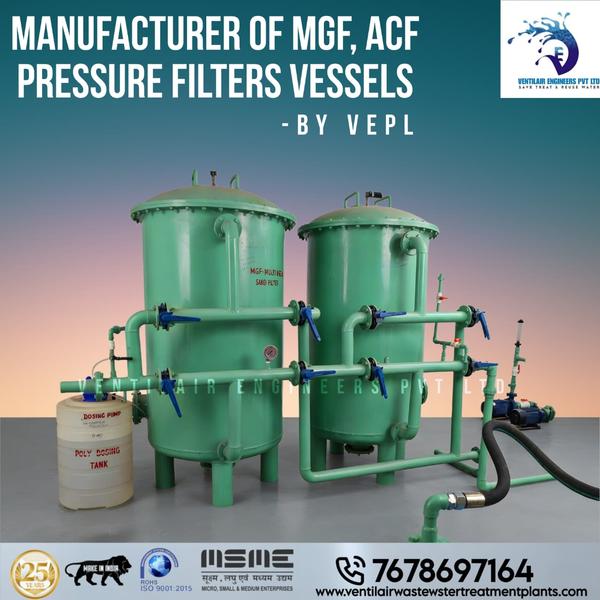
MGF, ACF & Pressure Filters

Ventilair Engineers Pvt. Ltd. (VEPL) – High Performance Filtration Systems Across UP, Delhi, Haryana & NCR Ventilair Engineers Pvt. Ltd. (VEPL) presents its advanced range of MGF (Multi Grade Filter), ACF (Activated Carbon Filter) & Pressure Filters, specially engineered for ETP & STP applications with superior filtration efficiency, robust construction, and long service life. Designed as per industry standards and compliant with Central Pollution Control Board (CPCB) norms, our filtration systems ensure crystal clear treated water with enhanced purification performance. 🔹 VEPL Special Design Advantage ✔ Up to 100% Higher Purification Efficiency* ✔ Enhanced Filtration Performance vs Conventional Filters ✔ Special 7-Cover Strainer Design 👉 Maximum surface area for better filtration & longer run cycles ✔ Uniform flow distribution = No channeling issue ✔ Better media utilization = Higher output quality *Performance depends on influent quality & system configuration. 🔹 Product Range & Capacity Diameter Range: 300 mm to 3000 mm Suitable for: Small to Large Industrial ETP/STP Plants MOQ: As per project requirement 🔹 Construction Details (Heavy Duty Design) ✔ Material of Construction: MS (Mild Steel) with FRP Lining (Corrosion Resistant) Optional: FRP / SS ✔ Thickness Specification: Shell Thickness: 6 mm to 10 mm Top & Bottom Dish End: 10 mm to 12 mm ✔ Internal anti-corrosive FRP lining for long life ✔ Heavy-duty fabrication for industrial usage 🔹 Technical Specifications ✔ MGF (Multi Grade Filter) Media: Pebbles, Gravel, Fine Sand Turbidity Removal: up to 90–95% Filtration Rate: 10–20 m³/hr/m² ✔ ACF (Activated Carbon Filter) Media: High-grade Activated Carbon Function: Color, odor, chlorine & organic removal Adsorption Efficiency: High ✔ Pressure Filter System Type: PSF + ACF Combination Operation: Pressure-driven filtration Backwash: Manual / Automatic 🔹 Key Components ✔ Pressure Vessel (MS + FRP Lined) ✔ Internal Laterals & Strainers (Special 7-Cover Design) ✔ Multiport / Butterfly Valves ✔ Pressure Gauges ✔ Backwash System ✔ Piping & Support Structure 🔹 Performance Benefits ✔ High Suspended Solid Removal ✔ Improved BOD / COD Reduction ✔ Crystal Clear Output Water ✔ Longer Media Life ✔ Reduced Backwash Frequency ✔ Energy Efficient Operation ✔ Suitable for Continuous Industrial Use 🔹 Applications Effluent Treatment Plants (ETP) Sewage Treatment Plants (STP) Industrial Wastewater Treatment Pre & Post RO Filtration Tertiary Treatment Systems 🔹 🌍 Our Service Coverage – All Major Industrial Areas 📍 Uttar Pradesh (UP) Industrial Areas: Noida, Greater Noida, Ghaziabad, Sahibabad Industrial Area, Meerut, Muzaffarnagar, Bulandshahr, Aligarh, Agra, Mathura, Kanpur, Lucknow, Unnao, Bareilly, Moradabad, Varanasi, Prayagraj, Gorakhpur 📍 Delhi Industrial Areas: Okhla Industrial Area, Bawana Industrial Area, Narela Industrial Area, Mayapuri Industrial Area, Naraina Industrial Area, Wazirpur Industrial Area, Jhilmil Industrial Area, Mangolpuri Industrial Area, Kirti Nagar 📍 Haryana Industrial Areas: Gurugram (Gurgaon), IMT Manesar, Faridabad, Panipat, Sonipat, Kundli Industrial Area, Bahadurgarh, Rohtak, Karnal, Yamunanagar, Hisar, Bhiwani 📍 Delhi NCR Key Industrial Zones: Bhiwadi, Neemrana, Khushkhera, Tapukara (Rajasthan Belt) Greater Noida West, Noida Extension Kundli–Sonipat Industrial Belt IMT Manesar Industrial Hub 🔹 Why Choose VEPL Filters? ✔ Heavy Duty Industrial Design ✔ CPCB Norms Compliant ✔ Customized Engineering ✔ Proven Performance in Field ✔ Low Maintenance Cost ✔ Strong After-Sales Support 🔹 Powerful Branding Line “Double Performance Filtration with VEPL Special Design – Built for Maximum Purity & Long Life Across All Industrial Hubs” MGF Filter Manufacturer in UP ACF Filter Supplier Delhi NCR Pressure Filter Manufacturer Haryana MS FRP Lined Filter Manufacturer Ghaziabad Noida Gurgaon Industrial Water Filter System India ETP STP Filtration System NCR Multi Grade Filter Supplier Delhi Haryana UP Activated Carbon Filter Manufacturer India Heavy Duty Pressure Filter Supplier Wastewater Filtration Plant Manufacturer #MGFFilter #ACFFilter #PressureFilter #ETPFilters #STPFilters #WaterFiltration #IndustrialFilters #MSFRPFilter #WastewaterTreatment #CPCBCompliant #DelhiNCRIndustry #UPIndustry #HaryanaIndustry #VentilairEngineers #CleanWater #ReuseWater #ZeroDischarge #EnvironmentalSolutions

68179d65be22ee500d53ff54 Card 2

product image
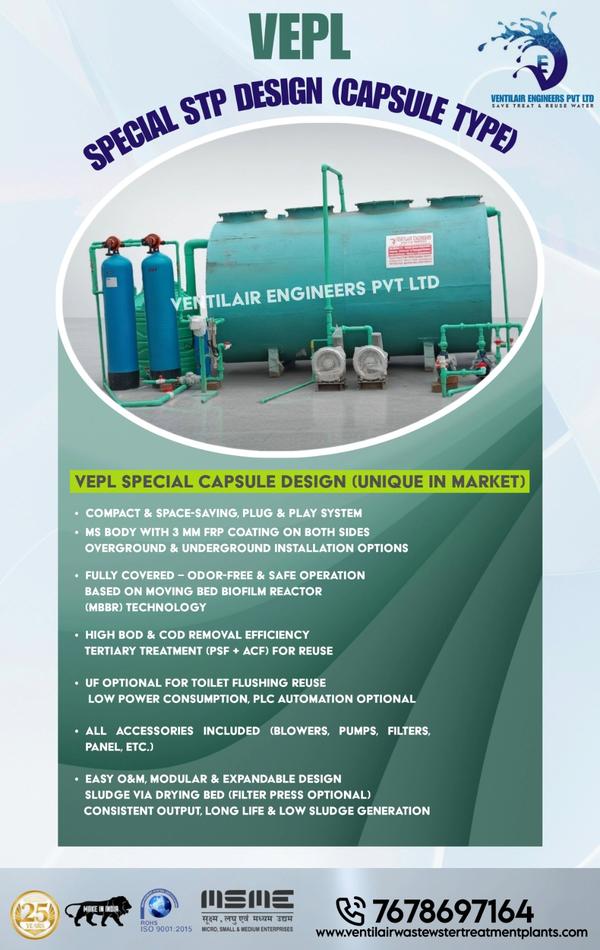
Sewage Treatment Plant

Capsule Type STP (MBBR Based) – Compact, Modular & High-Efficiency Solution Introduction: The Shift Towards Smart Sewage Treatment In today’s rapidly evolving infrastructure landscape, the expectations from utility systems—especially sewage treatment—have changed significantly. Earlier, sewage treatment plants (STPs) were considered a backend necessity, often installed in remote corners of a facility with little emphasis on design, aesthetics, or operational efficiency. However, modern developments such as premium residential societies, commercial complexes, hospitals, educational institutions, and hospitality projects demand far more advanced solutions. Key challenges faced in conventional STPs include: Large land footprint requirements Long construction and commissioning timelines Frequent odor issues affecting surrounding areas High maintenance and manpower dependency Inconsistent treated water quality Poor aesthetic integration with modern infrastructure At the same time, environmental regulations by CPCB/SPCB authorities have become more stringent, requiring reliable and consistent treatment performance. These evolving needs have led to the emergence of compact, modular, and high-efficiency treatment systems, among which Capsule Type STP (MBBR Based) stands out as a game-changing innovation. Ventilair’s Advanced Capsule STP – A Next-Generation Solution Addressing all the limitations of conventional systems, Ventilair Engineers Pvt. Ltd. presents its Advanced MBBR Capsule STP System—a technologically advanced, compact, and fully engineered sewage treatment solution. This system is designed with a focus on: Maximum efficiency in minimum space Long-term operational reliability Ease of installation and operation Aesthetic and odor-free performance Complete compliance with environmental norms Unlike traditional STPs, which are heavily dependent on civil construction and site conditions, Ventilair’s Capsule STP is a prefabricated, modular, and plug-and-play system, making it ideal for modern infrastructure projects. What is Capsule Type STP (MBBR Based)? The Capsule Type STP is a fully enclosed, factory-fabricated sewage treatment system that utilizes Moving Bed Biofilm Reactor (MBBR) technology for biological treatment. Core Working Principle: MBBR Technology MBBR is one of the most advanced biological treatment processes, where: Special bio-media is suspended in the aeration tank Microorganisms grow on the surface of this media These microbes break down organic pollutants efficiently Key Benefits of MBBR Technology Higher biological treatment efficiency Ability to handle load fluctuations Reduced sludge generation Stable and consistent performance Compact reactor size compared to conventional systems Robust Design & Construction The Ventilair Capsule STP is engineered for durability and long service life. Construction Highlights: Heavy-duty Mild Steel (MS) structure 3 mm FRP coating (internal & external) High corrosion resistance Leak-proof and weather-resistant design Fully Enclosed System The system is completely covered, ensuring: Odor-free operation Noise reduction Hygienic environment Protection from external contamination This makes it highly suitable for installations in premium and sensitive environments. Why Capsule Type STP is the Need of Modern Projects Modern infrastructure demands solutions that are not just functional, but also efficient, compact, and visually acceptable. 1. Space Optimization Urban land availability is decreasing rapidly. Capsule STPs are designed to occupy minimal footprint, making them ideal for space-constrained projects. 2. Odor-Free Operation Traditional open tanks often create odor nuisance. Capsule STPs eliminate this issue through fully enclosed design and proper aeration control. 3. Faster Execution Since the system is prefabricated: No extensive civil work required Quick installation and commissioning Reduced project timelines 4. Aesthetic Integration Capsule systems can be: Installed above ground or underground Covered or landscaped Integrated seamlessly into modern infrastructure 5. Low Operational Dependency Automated systems Minimal operator intervention Reduced manpower requirement Key Features & Technical Advantages 1. Plug & Play Prefabricated System Factory-tested units Easy transportation and installation Ready-to-use system 2. Installation Flexibility Overground installation Underground installation Semi-buried options 3. Advanced Tertiary Treatment Pressure Sand Filter (PSF) Activated Carbon Filter (ACF) Ensures high-quality treated water 4. Optional Ultrafiltration (UF) Advanced membrane-based filtration Suitable for reuse applications like flushing, gardening, cooling 5. Efficient Sludge Management Sludge drying beds Filter press systems Reduced sludge handling issues 6. Energy Efficient Operation Optimized aeration system Low power consumption 7. Low Maintenance Minimal mechanical complexity Easy access for servicing ..

68179d65be22ee500d53ff54 Card 2

product image
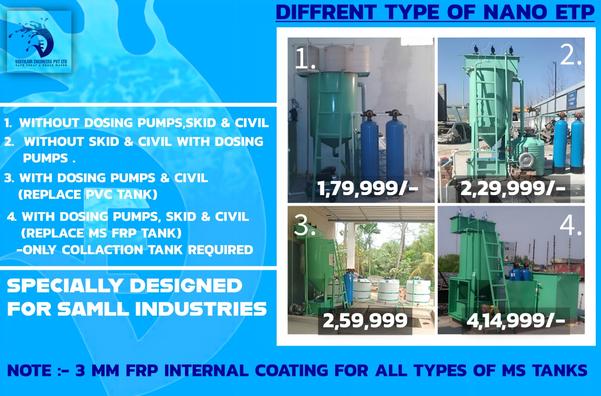
EFFLUENT TREATMENT PLANT
INR 179999